
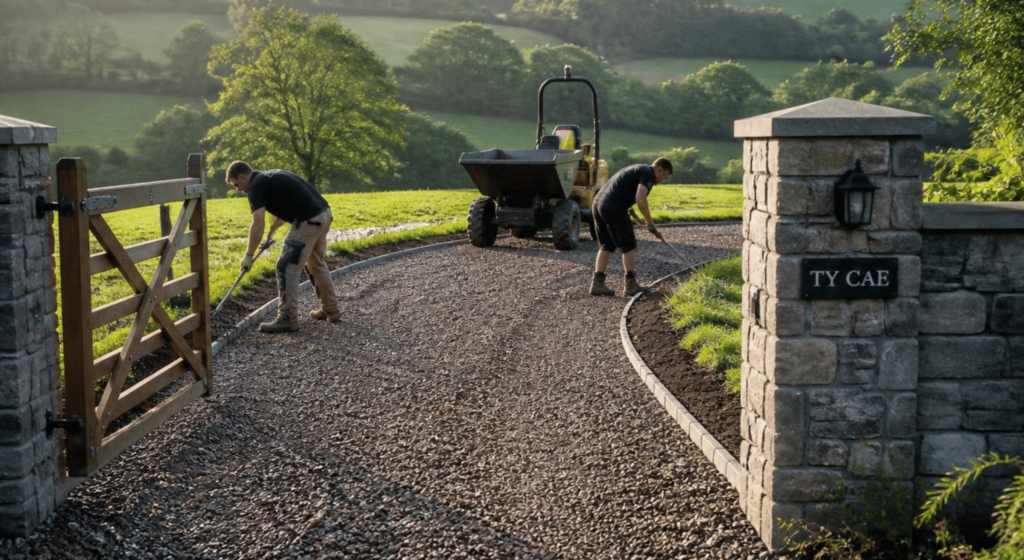
Gravel Driveways in South Wales: Costs, Pros and Cons
A gravel driveway is the cheapest way to get a smart, functional drive, and it’s one of the most requested options we quote across Monmouthshire and the South Wales Valleys. Here’s what it actually costs, where it works well, and where it doesn’t.
We’re Classic Paving and Fencing, run by Andrew Morgan, who’s laid driveways across South Wales, Herefordshire and the Forest of Dean for over 35 years. This guide covers gravel specifically, since it’s a material we get asked about constantly but that doesn’t get covered properly on most driveway pages.
What Does a Gravel Driveway Cost in South Wales?
Gravel is consistently the cheapest driveway surface. Here’s what you should budget for:
| Driveway Size | Typical Total Cost |
|---|---|
| Small (up to 30m²) | £1,200 to £2,200 |
| Medium (around 50 to 60m²) | £2,500 to £4,200 |
| Large (90m² plus) | £3,800 to £5,800 |
That works out at roughly £45 to £60 per square metre, including a proper sub-base and edging. South Wales labour costs generally sit a little below the UK average, so you may find quotes here come in slightly cheaper than MyJobQuote’s national gravel driveway cost guide suggests. Compare that to block paving at £85 to £110 per m², and it’s easy to see why gravel is popular for larger driveways or budget-conscious jobs.
The cost depends heavily on the sub-base. A gravel driveway laid without a proper sub-base looks fine for a season, then sinks, ruts and turns muddy at the first sign of heavy rain. That’s the single biggest mistake we see from DIY gravel jobs and cheap installers cutting corners.
Pros of a Gravel Driveway
Cost. It’s the cheapest surface to install, and cheaper again if you’re extending an existing gravel area rather than starting from scratch.
Drainage. Gravel is naturally permeable, so rainwater soaks through rather than pooling or running onto the road. That usually means you avoid needing planning permission, since permission is only required for impermeable surfaces over 5 square metres that drain onto a public road, as set out in the Planning Portal’s permitted development guidance for driveways.
Character. Gravel suits period, rural and cottage-style properties particularly well, which describes a lot of housing stock around Monmouth, Abergavenny and the villages surrounding Chepstow.
Quick installation. A gravel driveway typically takes 1 to 2 days for a small drive, faster than block paving or resin.
Cons of a Gravel Driveway
Weeds. Without a proper weed membrane underneath, weeds will push through the gravel within a year or two. This is fixable with the right membrane at installation, but it’s a real problem if that step gets skipped.
Movement and topping up. Gravel shifts under tyres and foot traffic over time, especially near entrances and turning points. Expect to top it up every 2 to 3 years to keep coverage even.
Loose stones. Gravel travels. Stones end up on the lawn, in flowerbeds, and occasionally in a car’s tyre tread. Proper edging restraints cut this down a lot, but they don’t stop it completely.
Sinking without a sub-base. As mentioned above, skipping a proper compacted sub-base is the main cause of gravel driveways failing early. It’s also the main difference between a good installer and a cheap one.
Snow clearing. Gravel is harder to clear with a shovel or snow plough than a hard surface, since you risk scooping up stones along with the snow. This matters more in the colder months across Herefordshire and the Forest of Dean.
Gravel vs Block Paving vs Tarmac: How It Compares
Gravel wins on price and drainage. Block paving wins on durability and kerb appeal, lasting 25 to 30 years against gravel’s need for ongoing top-ups. Tarmac sits in the middle: cheaper than block paving, but not permeable, so it needs proper drainage planning to avoid the planning permission issue mentioned above.
If your priority is getting the cheapest functional driveway and you don’t mind occasional maintenance, gravel makes sense. If you want a low-maintenance surface that looks sharp for decades, block paving or resin bound is the better long-term investment. For the full range, see our driveways page.
Why Choose Classic Paving and Fencing for a Gravel Driveway
Andrew Morgan has installed driveways across Monmouthshire and the South Wales Valleys for more than 35 years, including plenty of gravel drives that are still holding up well a decade or more later. That comes down to getting the sub-base and edging right the first time, not cutting corners to win the cheapest quote.
We give every customer covering Monmouth, Chepstow, Abergavenny and the surrounding areas a free, on-site quote before any work starts. If gravel isn’t the right call for your specific drive, we’ll say so honestly rather than just taking the job. Call Andrew on 07973 344149 to arrange a visit, or see our Monmouth driveways page for more on what we cover locally.
Is a Gravel Driveway Right for You?
Gravel works well if you’re after the lowest install cost, good drainage, and a rural or period look. It’s less suited if you want a completely low-maintenance surface, have young children who might scatter loose stones, or need easy snow clearing through winter. If any of those matter more to you than upfront cost, block paving or resin bound is worth the extra spend.
Frequently Asked Questions
How much does a gravel driveway cost in South Wales?
A small gravel driveway (up to 30m²) typically costs £1,200 to £2,200. A medium driveway around 50 to 60m² runs £2,500 to £4,200. Call 07973 344149 for a free, accurate quote based on your specific drive.
Do gravel driveways get weeds?
Yes, if a weed membrane isn’t installed underneath the gravel. With the right membrane laid properly at installation, weed growth is minimal. This is one of the most common corners cut by cheaper installers.
Do I need planning permission for a gravel driveway?
Usually not. Gravel is permeable, so rainwater drains through it naturally rather than running onto the road. Planning permission is generally only required for impermeable surfaces over 5 square metres draining onto a public road. See our driveways page for more on driveway planning rules.
How long does a gravel driveway last?
With a proper compacted sub-base, a gravel driveway can last 15 years or more, though it needs topping up every 2 to 3 years to stay level and fully covered. Without a proper sub-base, expect sinking and rutting much sooner.
Is gravel cheaper than block paving?
Yes, gravel typically costs £45 to £60 per square metre installed, against £85 to £110 per square metre for block paving. Gravel needs more ongoing maintenance, so factor that into the total cost over time, not just the install price.
Can you lay a gravel driveway over an existing tarmac or concrete drive?
Sometimes, but it’s usually better to remove the old surface first so the sub-base and drainage are set up properly underneath. We’ll assess this during your free on-site quote and give you an honest recommendation either way.
Do you install gravel driveways in Monmouth and the surrounding area?
Yes, gravel is one of the driveway options we install regularly across Monmouth, Monmouthshire and the South Wales Valleys. See our Monmouth driveways page or call 07973 344149 to book a free quote.