
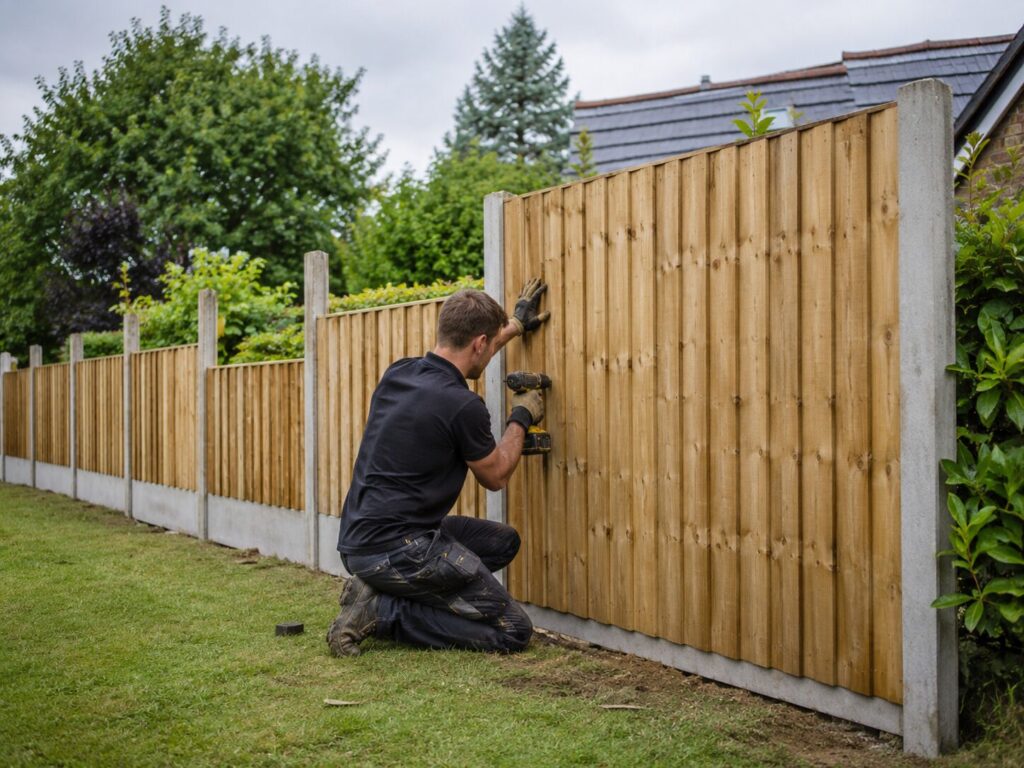
Feather Edge vs Closeboard Fencing: Which Is Best for South Wales Gardens?
If you’re getting quotes for new garden fencing and the contractor keeps asking whether you want feather edge or closeboard, you’re not alone in wondering what the difference actually is.
The truth is, these two types of fencing get confused all the time. Some people use the names interchangeably. Others think they’re completely different products. The reality sits somewhere in the middle.
This guide explains what each type is, how they compare, and which one tends to work better in the Welsh climate. If you’d rather just talk it through, give us a call on 07973 344149 and we’ll point you in the right direction.
Are Feather Edge and Closeboard the Same Thing?
Mostly, yes. You’ll often see these terms used to describe the same style of fence. Both involve vertical timber boards fixed to horizontal rails, overlapping slightly to keep wind and rain out. Both give you a solid, private boundary.
The key technical difference is in the boards themselves. Feather edge boards taper from thick at one side to thin at the other. They’re fitted one at a time, which takes longer but gives you more flexibility on uneven ground. Closeboard panels, on the other hand, come prefabricated in set sections and go up faster.
In practice, many fencing contractors (ourselves included) use the terms to mean the same style of fence. What actually matters to most homeowners is how it looks, how long it lasts, and what it costs.
The Key Differences Worth Knowing
How They’re Built
Feather edge fencing is built board by board on site. Because each board is nailed individually, it’s easier to follow the natural contour of your garden. This makes it a good choice if your boundary runs up or down a slope.
Closeboard panels are pre-made and installed as complete sections. The installation is faster, but getting a clean finish on a sloped garden requires more care.
Durability and Wind Resistance
Both are strong options. That said, individually fitted feather edge fencing tends to flex slightly more in strong winds, which can actually work in its favour rather than against it. A rigid panel catches more wind and puts more stress on the posts.
For South Wales, Monmouthshire and Herefordshire gardens that are exposed to westerly winds, having concrete posts (rather than timber) makes the biggest difference to long-term stability regardless of which board style you choose.
Privacy
Both give you full privacy when properly installed. The small overlapping gaps in feather edge fencing can open up slightly as the wood dries and expands over years, which is worth bearing in mind. Closeboard panels maintain a consistent look for longer without that kind of movement.
Cost
Feather edge fencing is generally the more cost-effective option, especially on longer runs. The boards are cheaper per metre than prefabricated closeboard panels.
For a rough guide to overall fencing costs in the region, take a look at our South Wales garden fencing cost guide. Prices vary based on length, post type, ground conditions and access.
Which Works Best in the Welsh Climate?
South Wales gets a lot of rain. Monmouthshire and Herefordshire aren’t immune either. That moisture is the number one reason garden fences fail early.
The most important thing you can do, whatever style you choose, is make sure the timber is pressure-treated. Pressure treatment pushes preservative deep into the wood rather than just coating the surface. It’s not an optional extra in this part of the world. It’s how you get a fence that lasts 15 to 20 years rather than needing replacement in 8.
For posts specifically, concrete is worth the extra cost. Timber posts rot at ground level over time, which is the most common reason fences fall over. Concrete posts are rot-proof and will outlast the fence boards themselves by a considerable margin.
Our fencing services page covers the full installation process, including post options and what we’d recommend for different types of ground.
Which Is Right for Your Garden?
Here’s a simple way to think about it:
- Sloped or uneven garden? Feather edge is easier to fit cleanly and gives a neater result on difficult ground.
- Straight, level boundary? Either works well. Closeboard panels go up faster.
- Working to a tighter budget on a long run? Feather edge is typically cheaper per metre.
- Exposed position with strong prevailing wind? Use concrete posts regardless of style.
- Want minimal maintenance and a consistent look over time? Closeboard panels hold their shape well.
Still not sure? That’s what site visits are for. We’ll take a look at the garden, the ground conditions, the exposure and what you’re hoping to achieve, then give you an honest recommendation.
Why Experience Makes a Difference
Getting fencing right isn’t just about choosing the right style. It’s about the preparation that happens before a single board goes up.
Andrew Morgan has been installing fencing across Abergavenny, Monmouth, Chepstow, Hereford and the surrounding areas for more than 35 years. That means he’s worked on all kinds of ground, from flat suburban gardens to sloped rural boundaries, and knows what’s likely to cause problems before it does.
Every job includes proper ground preparation, correctly set posts and a tidy finish. We don’t cut corners on materials or installation, because a fence that fails in two years isn’t good for anyone.
Read a bit more about how we work on our about page, or get in touch to arrange a free quote.
Frequently Asked Questions About Garden Fencing in South Wales
What's the actual difference between feather edge and closeboard fencing?
Feather edge boards taper from thick to thin and are fitted individually on site, one board at a time. Closeboard panels are prefabricated in full sections. Both use overlapping vertical boards and both give you a solid, private fence. The main differences are in installation time, flexibility on uneven ground, and cost.
Which lasts longer in South Wales?
Both can last 15 to 20 years when properly installed with pressure-treated timber and concrete posts. The Welsh climate is wet and changeable, so cutting corners on either the timber treatment or the post type shortens the lifespan significantly. With the right materials and good installation, either style will give you many years of solid performance.
How much does feather edge fencing cost in South Wales?
Installed costs typically range from around £60 to £120 per metre depending on fence height, post type, ground conditions and site access. Our fencing cost guide for South Wales has a more detailed breakdown. The best way to get an accurate figure is a free site visit.
Which gives better privacy?
Both give full privacy when installed correctly. Feather edge boards can develop small gaps over time as the wood moves with temperature and moisture changes. Closeboard panels maintain a more consistent profile for longer. That said, both are solid fencing options and the difference is minor in practice.
Can feather edge fencing be fitted on a sloped garden?
Yes, and it’s often the better choice for sloped ground. Because each board is fitted individually, it’s easier to follow the natural contour of the garden and get a clean result. Prefabricated closeboard panels can be stepped to follow a slope, but the individual board approach usually looks neater on steeper gradients.
How do I maintain timber fencing in the Welsh climate?
A good quality fence preserver or oil applied every two to three years is the most effective thing you can do. Keep the base of the fence clear of piles of leaves or soil, as moisture sitting against the wood accelerates rot. Check the posts at ground level each year. If you catch rot early you can treat it; if it gets into the post you’ll need a replacement. Check our
FAQs for more maintenance tips.
Do I need planning permission for garden fencing in South Wales?
In most cases, no. Garden fencing up to 1 metre high next to a public road, or up to 2 metres high elsewhere, doesn’t require planning permission in Wales. If you live in a conservation area or your property has permitted development rights removed, different rules apply. The Welsh Government planning portal has the full guidance. If you’re unsure, give your local planning authority a quick call before work starts.