
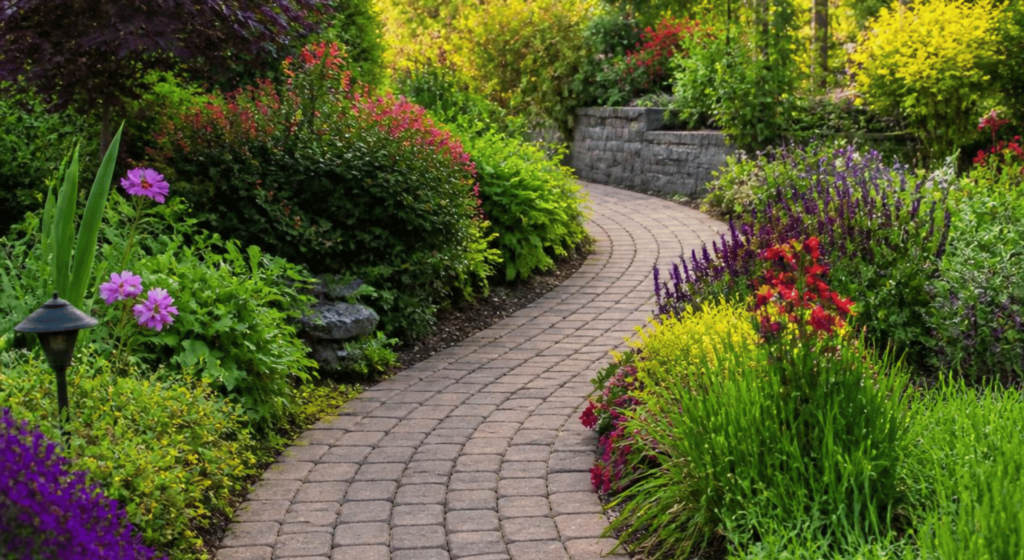
Garden Pathway Paving Ideas for South Wales Gardens
A good garden pathway does two jobs: it looks right against your planting, and it stays usable when it’s been raining for a week, which in South Wales is most of the year. Here are the materials and layouts that actually work here, along with real costs so you can plan a budget before getting quotes.
We’re Classic Paving and Fencing. Andrew Morgan has laid paths, patios and driveways across Monmouthshire and the South Wales Valleys for over 35 years, so this is based on what holds up through a Welsh winter, not just what photographs well.
Garden Path Materials That Work in South Wales
Block paving is the most durable option for a path that gets regular foot traffic. It matches driveway paving well if you want a joined-up look from the drive to the front door, and it handles wet weather without becoming slippery, provided the right finish is used.
Natural stone (sandstone, limestone or slate) gives a premium look and works particularly well in period gardens common around Monmouth and Abergavenny. It costs more than block paving but adds real kerb appeal.
Gravel is the cheapest option for a casual, cottage-style path, especially through a lawn or planted border. It drains well but needs edging to stop it spreading into flower beds, and it isn’t the best choice for a main path used daily in wet weather.
Concrete pavers offer a budget-friendly middle ground between gravel and natural stone, with a wide range of shapes and finishes.
Brick works well as edging or for a traditional, cottage-garden path, particularly alongside period properties.
Garden Path Cost Guide
| Material | Cost per m² |
|---|---|
| Gravel | £8 to £30 |
| Concrete pavers | £20 to £60 |
| Brick pavers | £30 to £70 |
| Block paving | £50 to £90 |
| Natural stone | £50 to £90 |
For context, a typical 12m² garden path costs roughly £550 for a basic gravel path, up to £1,000 or more for natural stone or block paving, once you include groundworks and edging, in line with MyBuilder’s UK pathway installation cost guide. Ground preparation is the cost most people underestimate. A path laid without a proper compacted sub-base will crack, sink or shift within a year or two, especially on the clay-heavy soil found in parts of Monmouthshire and the Valleys.
Design Ideas for South Wales Gardens
Straight paths suit a formal front garden and give the shortest, most practical route from gate to door, which matters when you’re carrying shopping in the rain.
Curved paths work well in larger rear gardens, especially where they lead round planting beds or toward a patio seating area. They read as more relaxed and suit cottage-style gardens.
Stepping stone paths through a lawn or planted border look good in spring and summer, but they’re less practical here through autumn and winter when grass gets waterlogged around each stone. If this is your preferred look, pair it with a proper sub-base under each stone so they don’t sink.
Path plus patio combinations make sense if you’re planning outdoor space anyway. Matching the path material to a patio ties the whole garden together and often costs less overall than commissioning them separately. See our patio installation page for patio options that pair well with a matching path.
Drainage: The Part Most Garden Path Guides Skip
South Wales gets more rainfall than most of the UK, so drainage matters more here than in a typical garden guide written for a drier region. A path with no fall (a slight slope) or camber will pool water rather than shed it, which turns slippery and green within a season. The RHS guide to permeable paving explains why letting water soak away rather than run off matters for the rest of the garden too, not just the path itself.
We always build in a slight camber or fall directing water off the path and into surrounding beds or a drainage channel, not just onto the lawn where it can waterlog. If your path runs alongside the house, water needs to be directed away from the foundations, not toward them. This is easy to get right at installation and expensive to fix afterwards.
Why Choose Classic Paving and Fencing for Your Garden Path
Andrew Morgan has laid garden paths, patios and driveways across Monmouthshire, Herefordshire and the South Wales Valleys for more than 35 years. That experience means knowing which materials handle Welsh weather and which sub-base setup actually stops a path sinking after a wet winter, not just guessing based on how it looks on day one.
We offer a free, no-obligation on-site quote for garden paths across Monmouth, Chepstow, Abergavenny and the surrounding area, whether it’s a standalone path or part of a bigger paving and patio project. Call Andrew on 07973 344149 to arrange a visit, or see our block paving driveways page if you’re planning a path to match a new driveway.
Is a New Garden Path Worth It?
If your current path is uneven, slippery in wet weather, or overgrown at the edges, replacing it is usually a small job for a big improvement in day-to-day usability. If you’re planning a patio at the same time, doing both together in matching materials tends to work out cheaper than two separate projects, since groundwork and delivery costs get shared across the job.
Frequently Asked Questions
How much does a garden path cost in South Wales?
A typical 12m² garden path costs around £550 for basic gravel up to £1,000 or more for block paving or natural stone, including groundworks and edging. Call 07973 344149 for a free quote based on your garden.
What’s the best material for a garden path in a rainy climate?
Block paving and natural stone both handle wet weather well, provided the surface finish isn’t overly smooth and the path has a slight camber to shed water. Gravel drains well too but needs edging and isn’t ideal for a daily-use main path.
Can a garden path match my driveway paving?
Yes, and it’s a popular request. Matching block paving between a driveway and garden path gives a joined-up look from the road to the front door. See our block paving driveways page for the materials we use.
Do garden paths need planning permission?
No, garden paths within your own property boundary don’t need planning permission. It’s a different situation from driveways, where drainage and impermeable surfaces over 5 square metres can trigger permission requirements.
How do you stop a garden path getting slippery in winter?
The right surface finish makes the biggest difference. A textured or riven finish grips better than a smooth, polished one. Proper drainage that stops water pooling on the path also reduces algae growth, which is the main cause of slippery paths through a Welsh winter.
Can you build a garden path and patio at the same time?
Yes, and it’s often better value than doing them separately, since groundwork, deliveries and labour get shared across one project. See our patio installation page for patio options that pair well with a new path.
Do you offer free quotes for garden paths?
Yes. Andrew visits every garden in person to assess ground conditions and drainage before quoting. Get in touch through our contact page or call 07973 344149 to arrange a visit.